 Cannes Transfer
Cannes Transfer
Cannes Transfer
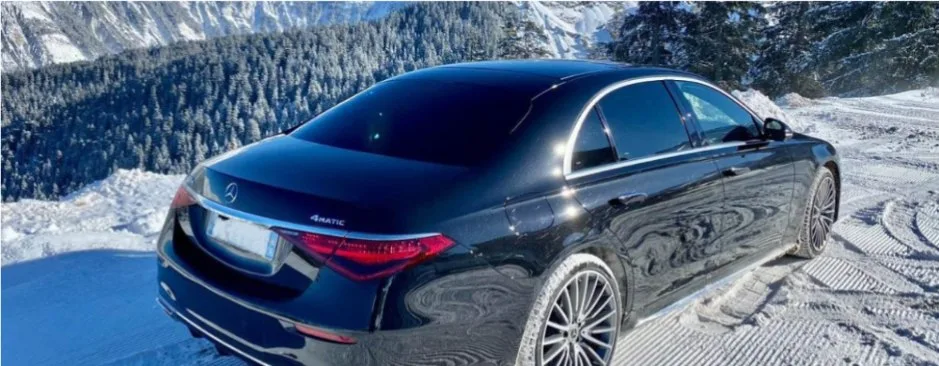
Nice Côte d'Azur Airport is the gateway not only to the French Riviera's beaches but also to some of the finest ski resorts in the Alps. Courchevel, Méribel, and Val Thorens — the three jewels of the massive Les Trois Vallées ski area — are all reachable by road from Nice in four to five hours. A private transfer is the most stress-free way to travel from the Mediterranean coast to the snowy peaks, especially when you are carrying ski equipment and travelling with family or a group.
At first glance, flying to Nice to reach a ski resort may seem counter-intuitive. But Nice Côte d'Azur is the third-busiest airport in France, with direct flights from over 120 destinations worldwide — far more connections than the smaller airports at Lyon, Grenoble, or Chambéry. For travellers coming from the UK, Scandinavia, the Middle East, Russia, or North America, Nice often offers the cheapest and most frequent flights.
The airport is modern, efficient, and well-equipped for winter sports passengers. Most airlines allow ski bags as checked luggage, and the arrivals hall has dedicated trolley areas for oversized equipment. From the terminal doors to your waiting private car is typically a walk of less than two minutes.
Another advantage is the scenery. The drive from Nice to the Alps takes you through some of France's most spectacular landscapes: the lavender-tinged foothills of Haute Provence, the dramatic Gorges du Verdon, the Lac de Serre-Ponçon, and finally the soaring peaks of the Tarentaise Valley. In a private vehicle you can enjoy this journey in comfort, with stops for coffee or lunch whenever you wish.
Your driver will collect you from the arrivals terminal at Nice Airport and head north on the A8 motorway toward Aix-en-Provence. After approximately 30 minutes the route turns onto the A51 northbound, climbing through the valleys of Haute Provence. The scenery shifts rapidly from Mediterranean scrub to pine forests and then to alpine meadows.
Near Gap, the road enters the Hautes-Alpes department and the landscape becomes unmistakably mountainous. The route continues north through Briançon or alternatively via the Col du Lautaret before joining the N90 in the Maurienne Valley. The final stretch follows the Isère River upstream through Moûtiers, the traditional gateway to Les Trois Vallées, before climbing the winding D915 to Courchevel.
In winter conditions the last 30 km from Moûtiers to Courchevel can be the slowest part of the journey. The road is well-maintained and regularly cleared, but snowfall, ice, and traffic on Saturday changeover days can add 30–60 minutes. All our vehicles carry snow chains and winter tyres as standard during the ski season.
Courchevel is the most famous resort in the Trois Vallées, but Méribel (15 minutes before Courchevel on the D90) and Val Thorens (45 minutes from Moûtiers via the D117) are equally accessible. If your accommodation is in La Tania or Le Praz, these lie on the approach to Courchevel 1850 and are even quicker to reach. Let us know your exact resort and we will provide a precise time estimate.
Driving in the French Alps during winter requires proper preparation and experience. French law mandates that between 1 November and 31 March, vehicles travelling in designated mountain zones must carry snow chains or be fitted with winter tyres marked M+S (mud and snow) or with the 3PMSF snowflake symbol. Police checkpoints are common on the approach to ski resorts and fines start at €135 for non-compliance.
All Cannes Transfer vehicles used for alpine routes are equipped with premium winter tyres and carry professional-grade snow chains in the boot. Our drivers are experienced in mountain driving and familiar with the specific conditions of each route and pass. They monitor weather and road reports in real time and will adjust the route if necessary to avoid closures or dangerous conditions.
Visibility can change rapidly in the mountains. Fog, snow squalls, and black ice are all possible between December and March, particularly at elevations above 1,500 metres. This is one of the strongest arguments for hiring a professional driver rather than renting a car — you can relax in the back seat while someone who drives these roads every week handles the conditions.
Les Trois Vallées is the largest connected ski area in the world, with 600 km of pistes, 166 lifts, and six interconnected resorts. Choosing where to stay depends on your budget, skiing level, and nightlife preferences.
Courchevel is divided into four altitude villages: Le Praz (1,300 m), Courchevel Village (1,550 m), Moriond (1,650 m), and the famous Courchevel 1850. The top station is synonymous with luxury — five-star hotels, Michelin-starred restaurants, and designer boutiques line the pedestrianised centre. Skiing is superb for all levels, with wide groomed runs, challenging off-piste, and a snow-sure north-facing orientation. Courchevel 1850 is also home to the altiport, a tiny runway perched on the mountainside that accepts small planes and helicopters.
Méribel is the friendliest and most accessible of the Trois Vallées resorts, popular with British families and intermediates. The architecture is traditional Savoyard chalet style, and the village has a more relaxed, less flashy atmosphere than Courchevel. It sits at the geographic centre of the Trois Vallées, making it easy to ski in every direction. The après-ski scene is lively, with pubs, bars, and live music.
At 2,300 metres, Val Thorens is the highest resort in Europe and enjoys the longest season — typically late November to early May. The architecture is functional 1970s concrete, but what it lacks in charm it compensates for with guaranteed snow, vast above-treeline skiing, and a vibrant, youthful nightlife. It is also the most affordable of the three resorts for accommodation and dining.
A private transfer from Nice Airport to Courchevel 1850 starts from €780 for a sedan (up to 3 passengers with ski equipment) and from €900 for a spacious minivan (up to 6 passengers plus equipment). Return transfers and multi-day ski packages are available at reduced rates. All prices are fixed and include fuel, tolls, winter equipment, and the driver's expenses.
We strongly recommend booking your ski transfer at least one week in advance, especially for Saturday arrivals and departures during the peak weeks of Christmas, New Year, and French school holidays (February). Same-week bookings are possible but subject to availability.
How much is a private transfer from Nice Airport to Courchevel?
A private transfer from Nice Airport to Courchevel starts at €405 — a fixed price for up to 4 passengers, with no surge pricing or hidden fees.
How long does the transfer from Nice Airport to Courchevel take?
The journey is about 150 km and takes 2.5–3 hours depending on traffic and your exact drop-off point.
How much is a taxi from Nice Airport to Courchevel?
A taxi for this long-distance route is rarely offered at a fixed rate and usually costs €450 or more — a pre-booked private transfer is more reliable and comfortable.
Is there public transport from Nice Airport to Courchevel?
Yes, but it is indirect (train to Moûtiers, then a bus or taxi up to the resort). It involves several changes and long travel times, while a private transfer is direct, door-to-door and far more comfortable with ski luggage.
Can I book a Courchevel transfer in advance?
Yes, you can book online with no prepayment. If you arrive by air, your driver tracks your flight and meets you with a name sign.