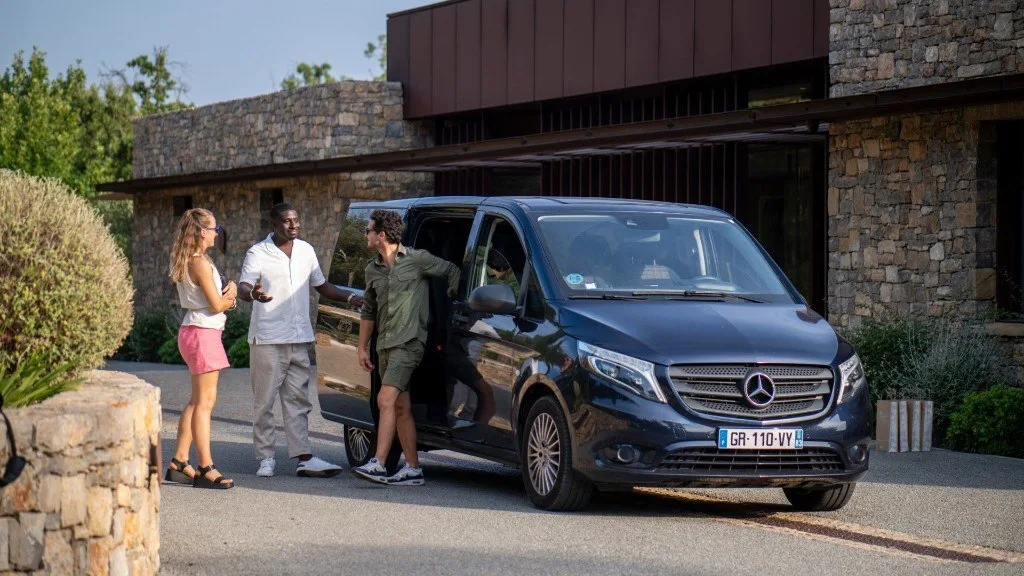
French Riviera Wine Tours by Private Car
Updated March 2026 · 9 min read
Provence is one of the world’s great wine regions, and the French Riviera sits right at its heart. From the tiny, prestigious Bellet vineyards hidden in the hills behind Nice to the celebrated rosé producers of Bandol and Cassis along the coast, the Riviera offers wine lovers an extraordinary range of experiences — all within easy reach by car. A private wine tour with a dedicated driver is the ideal way to explore these vineyards: you taste freely without worrying about driving, visit estates that are impossible to reach by public transport, and enjoy the stunning Provençal countryside at your own pace.
Bellet: Nice’s Hidden Wine Secret
Few people — even experienced wine drinkers — know that Nice has its own appellation d’origine contrôlée (AOC) wine region. Bellet is one of the smallest and rarest appellations in France, with just a handful of producers cultivating vines on the steep hillsides of Saint-Roman-de-Bellet, barely 15 minutes from the centre of Nice.
Private Transfer
Cannes Transfer — French Riviera
Mercedes · meet & greet · luggage assistance
What makes Bellet wines special is the combination of altitude (200–300 metres above sea level), the maritime influence of the nearby Mediterranean, and the unique local grape varieties. The white wines are made primarily from Rolle (Vermentino) and the rare Chardonnay de Bellet, producing elegant, mineral-driven wines with citrus and floral notes. The reds use Braquet and Folle Noire, two indigenous varieties found almost nowhere else. Bellet rosé, meanwhile, is a revelation — more complex and structured than many Provençal rosés, with a beautiful salmon colour and subtle red fruit character.
Because production is so limited (only about 100,000 bottles per year from the entire appellation), Bellet wines are rarely exported and hard to find even in Nice’s restaurants. Visiting the vineyards is the best — often the only — way to taste them.
Top Bellet Estates to Visit
- Château de Bellet: The flagship estate and the oldest in the appellation, with centuries of winemaking history. The tasting room overlooks the Var valley with views stretching to the Alps. Visits by appointment.
- Château de Crémat: Recognisable by its distinctive Art Deco architecture, this estate produces excellent rosé and white wines. The cellar tour is informative and the setting is stunning.
- Clos Saint-Vincent: A small, family-run organic estate producing some of the most acclaimed Bellet wines. Their white, made from old-vine Rolle, regularly receives high scores from international critics.
- Domaine de Toasc: A charming small estate with a warm, personal welcome. Their rosé is a particular highlight.
Tip: Bellet vineyards are spread across hillside lanes that are narrow and poorly signposted. A driver who knows the area is essential. Most estates require advance booking for tastings, so plan 2–3 days ahead. A half-day Bellet tour (3–4 hours, visiting 2–3 estates) is the perfect morning activity before lunch in Nice.
Bandol: Provence’s Premier Red Wine Region
About 1.5 hours west of Nice (or 1 hour from Cannes), the Bandol appellation is Provence’s most prestigious wine region, especially renowned for its powerful, age-worthy red wines made from the Mourvèdre grape. While Provence is known globally for rosé, Bandol proves that the south of France can produce world-class reds that rival those from much more famous regions.
Bandol reds are deep, complex wines with notes of dark fruit, garrigue herbs, leather, and spice. The best examples need 5–10 years of cellaring and can age beautifully for 20 years or more. The rosés from Bandol are also exceptional — richer, more vinous, and more food-friendly than the pale, delicate rosés typical of the rest of Provence.
The town of Bandol itself is a charming seaside resort with a tree-lined promenade, colourful fishing harbour, and excellent seafood restaurants. The vineyards are spread across the surrounding hillsides, forming a natural amphitheatre facing the sea — the terroir that gives Bandol wines their distinctive character.
Bandol Estates Worth Visiting
- Domaine Tempier: The legendary estate that almost single-handedly saved the Mourvèdre grape from extinction in the 1940s. Their wines are benchmarks for the appellation. Visits by appointment only.
- Château de Pibarnon: Perched at the highest point of the appellation (300 metres), with spectacular views over the Mediterranean. Their red is consistently one of Bandol’s finest.
- Domaine de Terrebrune: An organic estate producing elegant, terroir-driven wines. The tasting experience is intimate and educational.
- Château Pradeaux: A historic estate producing traditional, long-aged Bandol reds that are among the most profound wines in all of Provence.
Cassis: White Wine and Calanques
The tiny fishing port of Cassis, nestled between dramatic limestone cliffs 20 minutes east of Bandol, produces some of the best white wine in southern France. Cassis AOC white wines — made from Marsanne, Clairette, and Ugni Blanc — are crisp, aromatic, and perfect with the local seafood, especially the bouillabaisse for which the coast is famous.
A visit to Cassis combines wine tasting with one of the Riviera’s most spectacular natural sites: the Calanques. These dramatic limestone inlets, with turquoise water enclosed by towering white cliffs, are accessible by boat from Cassis harbour. A morning of wine tasting followed by an afternoon Calanques boat trip makes for an extraordinary day.
Cassis Estates to Explore
- Clos Sainte Magdeleine: The most famous Cassis producer, with vineyards that tumble down to the sea. The white wine is superb, and the views from the estate are unforgettable.
- Domaine du Paternel: A family estate with a wide range of wines and a welcoming tasting room. Good value for money.
- Château de Fontcreuse: A larger estate with a beautiful setting among olive and pine trees. They offer structured tours and tastings.
Combine Bandol & Cassis: The two appellations are just 20 minutes apart, making them perfect for a full-day wine tour. Visit 2 estates in Bandol in the morning, have lunch in Cassis harbour, taste white wine in the afternoon, and take a Calanques boat trip before heading back to Nice.
Provence Rosé: The World’s Most Popular Pink Wine
Provence produces more rosé than any other region in France, and the pale, elegant, dry rosés from the Côtes de Provence, Coteaux d’Aix-en-Provence, and Coteaux Varois appellations have become a global phenomenon. These wines — typically made from blends of Grenache, Cinsault, Syrah, and Mourvèdre — are known for their very pale salmon or onion-skin colour, delicate aromas of white peach, citrus, and herbs, and refreshing, food-friendly character.
The best way to understand Provençal rosé is to visit the estates where it is made. Many of the most acclaimed producers are located in the hills of the Var department, between the coast and the interior — an area of extraordinary beauty with rolling vineyards, medieval hilltop villages, and vast forests of umbrella pines and cork oaks.
Rosé Estates to Visit
- Château d’Esclans (Whispering Angel): The estate that arguably launched the global rosé craze. Their entry-level Whispering Angel is ubiquitous, but the top cuvées (Rock Angel, Les Clans, Garrus) are serious wines worth tasting on site. Located near Draguignan, about 1.5 hours from Nice.
- Domaines Ott: With three estates across Provence (Château de Selle, Clos Mireille, and Château Romassan in Bandol), Ott is synonymous with premium rosé. Their distinctive bottle shape is instantly recognisable.
- Château Minuty: Located on the Saint-Tropez peninsula, Minuty is one of the largest rosé producers in Provence and a consistent quality benchmark. The estate is beautiful and the tasting room well-organised.
- Domaine Gavoty: A family estate in the Var producing elegant, traditional Provençal rosé. Less well-known internationally but highly respected locally.
Half-Day vs. Full-Day Wine Tours
We offer flexible wine tour options to suit every schedule and interest level:
Half-Day Tour (4–5 hours)
Perfect for guests who want a taste of Provençal wine culture without dedicating an entire day. A typical half-day itinerary visits 2–3 estates in a single appellation. The most popular half-day options are:
- Bellet morning tour: Depart Nice at 9:30 AM, visit 2–3 Bellet estates, return by 1:30 PM in time for lunch in Nice. Ideal because the vineyards are so close.
- Afternoon rosé tour: Depart at 1:00 PM, visit 2 estates in the Côtes de Provence (near Le Luc or Draguignan), return by 6:00 PM with a golden-hour drive through the Provençal countryside.
Full-Day Tour (8–9 hours)
For wine enthusiasts who want a comprehensive experience. A full-day tour covers two appellations, includes lunch at a winery or in a local village, and visits 3–5 estates. Popular itineraries include:
- Bandol + Cassis day: Visit 2 Bandol estates, lunch in Cassis, 1–2 Cassis tastings, optional Calanques boat trip. The ultimate Provence wine day.
- Rosé grand tour: Start at Château d’Esclans, visit a second estate near Draguignan, lunch in a village like Cotignac or Lorgues, afternoon at a third estate, return via the scenic Gorges du Verdon road.
- Bellet + Var exploration: Morning in Bellet, drive through the Var interior visiting medieval villages (Tourrettes-sur-Loup, Gourdon, Grasse) and 1–2 rosé estates, return along the coast.
Pricing: Half-day wine tours start from €250 (sedan) or €300 (minivan). Full-day tours start from €400 (sedan) or €500 (minivan). Prices include vehicle, driver, fuel, tolls, and parking. Tasting fees at estates (typically €5–€15 per person) and lunch are not included.
Why a Private Car Is the Best Way to Tour Provence’s Vineyards
Many visitors consider joining a group bus tour or renting a car for their wine day. Both have significant drawbacks compared to a private transfer:
- Safety first: French drink-driving laws are strict (0.5 g/L blood alcohol limit), and a single tasting session at a winery can easily put you over the limit. With a private driver, you taste freely and travel safely.
- Access: Many of the best estates are on narrow country lanes with no public transport access. A rental car gets you there, but you cannot taste. A private driver solves both problems.
- Flexibility: Group tours follow a fixed itinerary with set time at each stop. With a private car, you linger at an estate you love or skip one that does not interest you. Your driver can also suggest hidden gems based on your preferences.
- Comfort: After several tastings, a comfortable ride back in an air-conditioned Mercedes is infinitely more pleasant than navigating Provençal back roads yourself.
- Local knowledge: Our drivers know the winemakers personally and can often arrange visits to estates that are not normally open to the public or help you find the best restaurant for a wine-paired lunch.
Practical Tips for Your Wine Tour
- Book estate visits in advance: Most serious wineries require reservations for tastings, especially in the busy June–September season. Let us know your preferences and we will help arrange visits.
- Start early: Wineries typically open at 9:00 or 10:00 AM. Starting early avoids the midday heat and gives you more time at each estate.
- Eat before you drink: Have a good breakfast before the tour. Wine tasting on an empty stomach is never a good idea.
- Bring a cooler bag: If you plan to buy bottles, we can provide a cooler to keep them at the right temperature during the drive, especially important in summer.
- Spit and pour: Do not feel obliged to drink every tasting. Professional wine tasting involves spitting — it is expected and respectful, and it lets you taste more wines more effectively.
- Ask questions: Provençal winemakers are passionate and knowledgeable. Asking about their grape varieties, soil, and winemaking philosophy leads to the best tasting experiences.
- Dress comfortably: Vineyards involve walking on gravel and uneven ground. Wear comfortable shoes and bring sun protection.
Book Your Wine Tour
Discover Provence’s finest vineyards with a private driver. Taste freely, travel safely, enjoy the scenery.
Book Your Transfer
 Cannes Transfer